
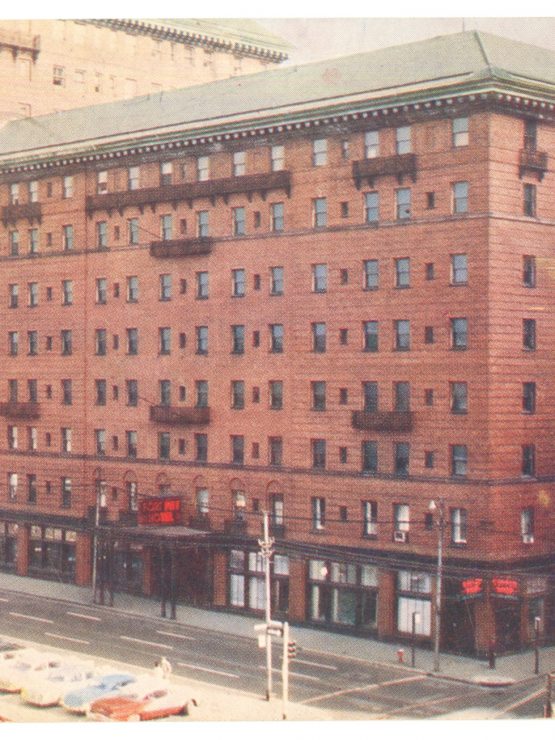
In December 1947, Pittsburgh stepped in to host the 1948 NFL Draft—the first and only time the event was held in the city until this year.
Originally planned for Chicago, the league rescheduled the annual event in Pittsburgh when the Steelers and Eagles qualified for the Eastern Division championship, the Steelers’ first postseason game.
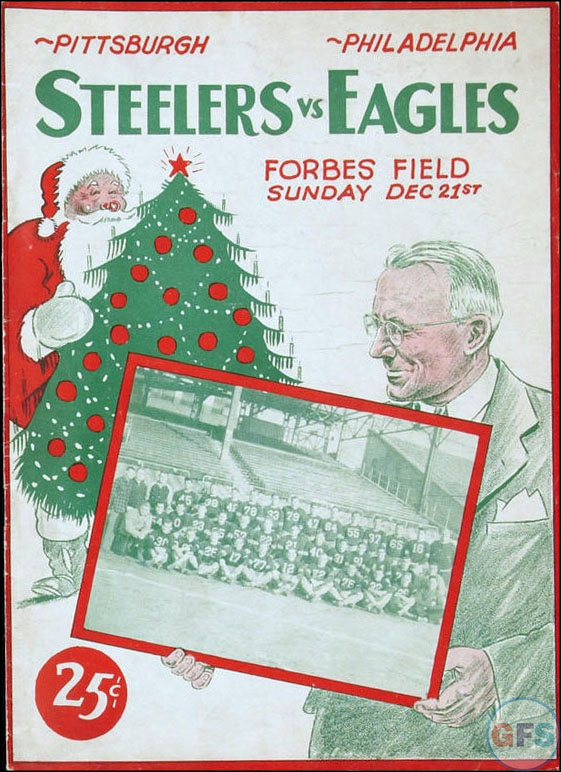
NFL program for Steelers vs. Eagles, Dec. 21, 1947.
Held two days before that playoff game on Friday, Dec. 19, the draft featured 300 picks to be chosen in 32 rounds. The draft began at 6 p.m. and the owners and coaches representing the 10 NFL franchises at the time stayed sequestered in the first-floor Fort Pitt Hotel offices of the Steelers until early in the morning to make their choices.

The exterior of the Fort Pitt Hotel. Detre Library & Archives at the Heinz History Center.
Identifying and choosing players, however, did not guarantee success. The Steelers, who had the third pick in Round 1, chose consensus All-American Texas Longhorn quarterback Bobby Layne with their first pick. Layne had no interest in playing for the Steelers, and his rights were quickly traded to the Chicago Bears. In addition, a rival league, the two-year-old All-American Football Conference (AAFC), posed a formidable threat. Better capitalized than some of the NFL franchises, they vied to sign many of the same players.
The Steelers lost two of the team’s next three draft picks in 1948 to the rival league — Dan Edwards, an end from Georgia, chosen with the ninth pick of the first round, signed with the Brooklyn Dodgers of the AAFC. The team’s third-round pick, back Jerry Nuzum, played four years here in Pittsburgh, but John Wozniak, chosen in the fifth round, also signed with Brooklyn.
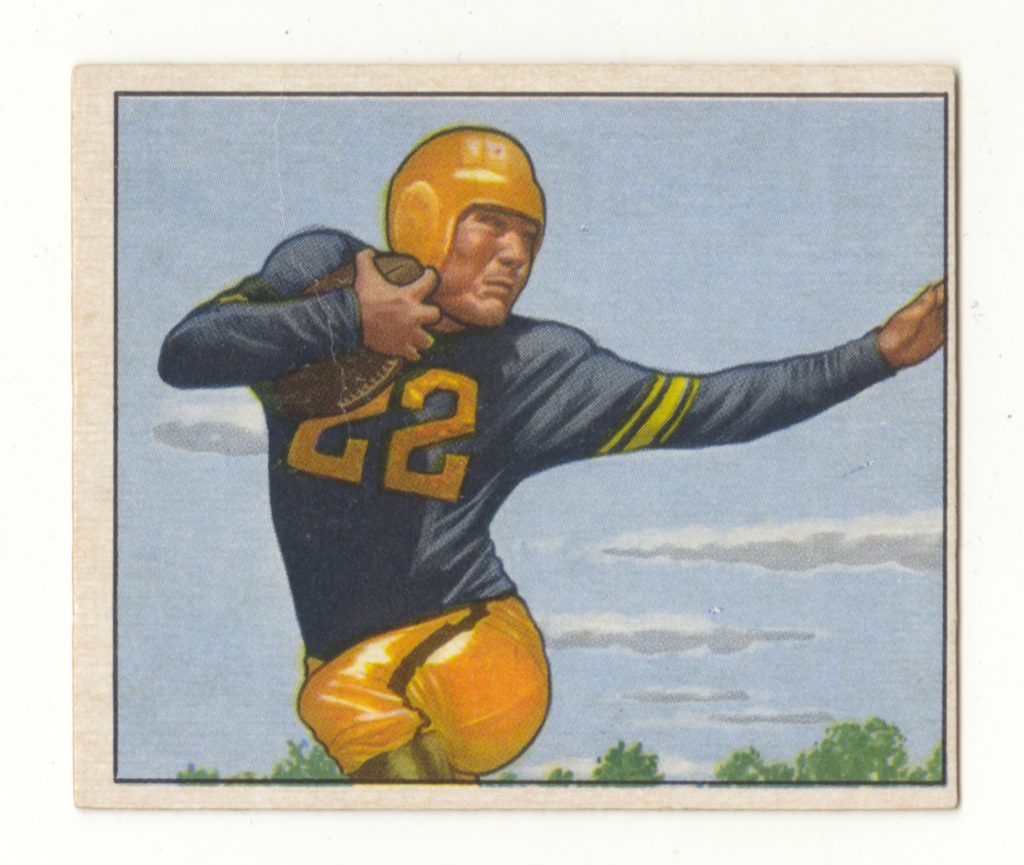
Bowman trading card for Jerry Nuzum, 1950. Chosen by the Steelers in the third round of the 1948 draft, Nuzum, the team’s leading back, racked up 611 yards in 1949. He spent four seasons with the team. Museum Collection, Gift of Lauren Uhl.
Unlike today, the 1948 draft took place out of the public eye. After the draft, three teams, including the Steelers, refused to disclose their picks, hoping to get players under contract before the AAFC could outbid and sign them.
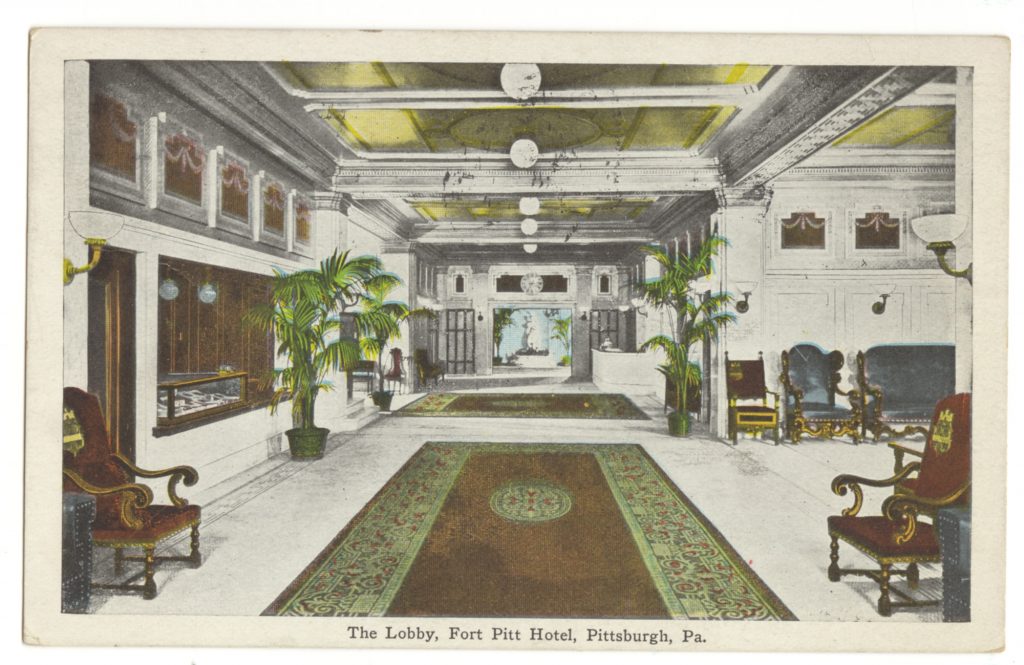
Postcard showing the lobby of the Fort Pitt Hotel. Detre Library & Archives at the Heinz History Center.
Al Abrams noted sportswriter for the Pittsburgh Post-Gazette even posed the question in his column “Why Hide Draft Choices?” reasoning that both leagues knew of and would draft the best college players. Still, the NFL hoped to hold off the competition and the resulting escalation of salaries.
One of several leagues that challenged the NFL in the 1940s, the AAFC successfully signed talented national players in 1948 but could not sustain the costs of stabilizing multiple franchises located across the country and folded in 1949. The NFL did benefit, growing the league when three AAFC teams joined the league: San Francisco, Baltimore, and the Cleveland Browns, the AAFC’s most successful franchise.
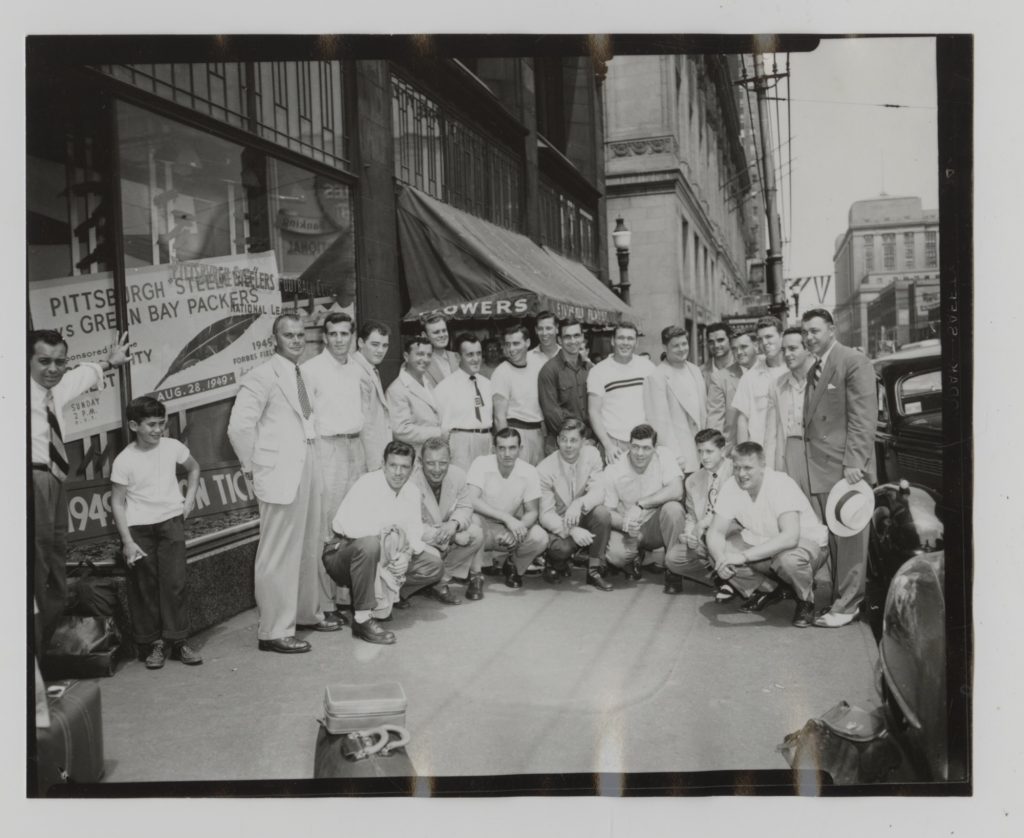
Pittsburgh Steelers in street clothes, c. 1949. Courtesy of Pittsburgh Post Gazette.
The draft returned to Philadelphia in 1949 and was primarily held there or in New York until 2014. The structure of scouting national players evolved over time, but in the absence of televised college games and personnel departments integrated into each team, it remained largely unorganized.
As the Korean War drained talent in the early 1950s, NFL teams were forced to scramble to identify future pros. They relied on newspaper accounts of college players, loose networks of high school and college coaches, and annual all-star games such as the Senior Bowl (first played in 1950) and the Chicago Charities College All-Star game, contested from 1934 to 1976, to learn about or see players in action.
The Los Angeles Rams are acknowledged as the first team to employ a full-time professional scout, Eddie Kotal, who spent the college football season traveling the country, setting up a formal network of contacts, watching players, and filing detailed reports that informed the team’s draft picks.
As Jack Butler, a defensive back for the Steeler in the 1950s and the future head of the BLESTO scouting combine, recalled, “At Washington & Jefferson, which was only 30 miles outside of Pittsburgh, they got ‘Deacon Dan’ Towler. I don’t even know if Pittsburgh knew he existed.”
The 1948 draft and the decade after reminds us how professional football has changed in the intervening decades. The NFL did in one night what it now takes three days to accomplish. Now the evaluation of players can begin years before the draft with ample film available and opportunities such as the NFL Combine for teams to judge talent.
In 1947, when the 10 franchises gathered in Pittsburgh, there was no guarantee that the NFL would survive and prosper and certainly no inkling that the draft would one day become one of the largest and most watched events in sport.
It would be more than 20 years until the Steelers hired Chuck Noll as head coach and the team demonstrated the power of the draft to build a championship dynasty.

Dan Rooney announces Chuck Noll as the Steelers’ new head coach, Jan. 27, 1969. Pittsburgh Post-Gazette
About the Author
Anne Madarasz is the director of the Franco Harris Sports Museum and chief historian at the Heinz History Center.